

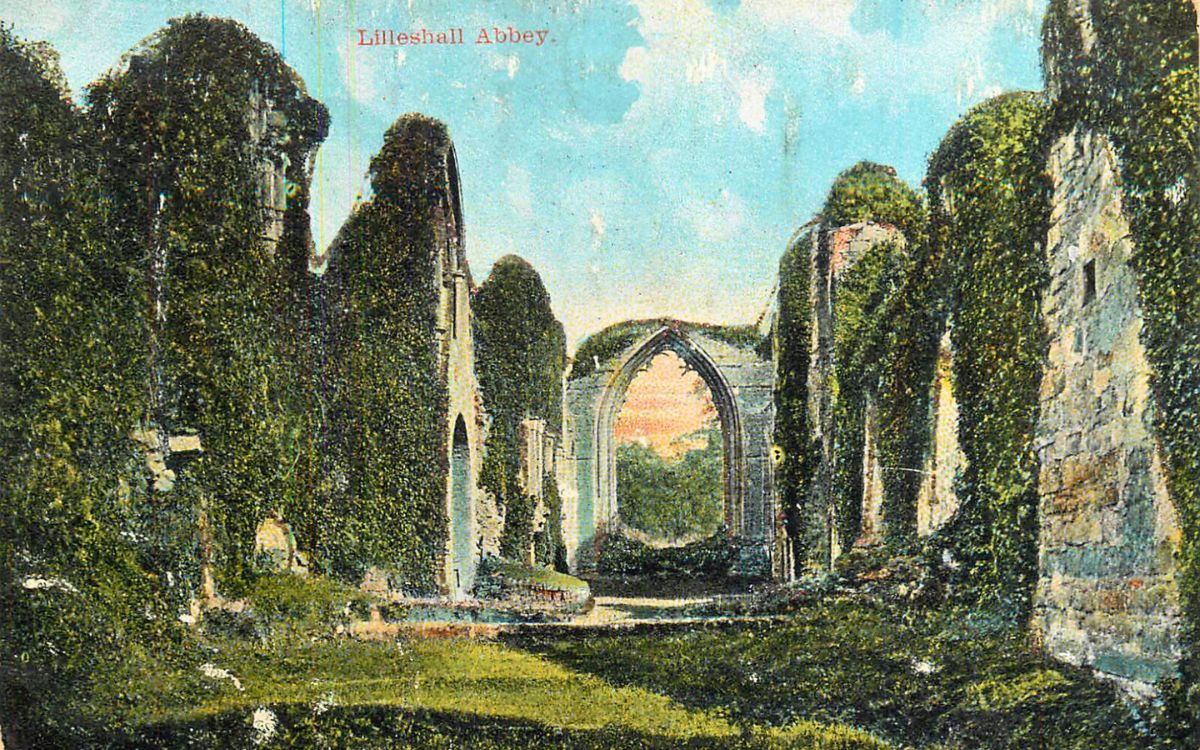
Between the Shropshire towns of Telford and Newport lie the magnificent and imposing sandstone ruins of Lilleshall Abbey.
The extensive remains make for an impressive sight and give us a glimpse of a once prosperous establishment.
History of Lilleshall Abbey
The abbey was founded in around 1148, part of the Augustinian order, known as the ‘black canons’ due to the colour of their habits.
The early years were perhaps not as harmonious as one might expect, with even the Archbishop of Canterbury becoming aware of strife among the community.
By the 13th century Lilleshall was prosperous, and the prestige of the abbey was such that Henry III visited twice in around 1270.
Unfortunately, by the 14th century Lilleshall was experiencing financial problems, although this was the case with many monastic houses of the time.
Lilleshall Abbey was surrendered to the king on 16 October 1538 and it soon passed into the possession of James Leveson, whose family lived on the site until the 17th century.
In 1643, during the English Civil War, Sir Richard Leveson fortified the abbey and garrisoned it with 160 men for the king, and Parliamentarian forces besieged the abbey, eventually forcing entry, but not before much damage had been done to the buildings.
From then the abbey was left to ruin before passing into state ownership in 1950.
It is perhaps no surprise that a site with such a long, and at times turbulent, history has its share of alleged paranormal activity.
Ghost of monk seen at Lilleshall Abbey
A monk wearing the black of the Augustinian order has been seen on a number of occasions, sometimes near the elaborate Norman archway between the church and the cloister, sometimes disappearing from the east end of the church into the sacristy, and sometimes knelt in prayer near the altar.
It was here that he was encountered by Mr Shaw, a former custodian of the abbey who was walking around the site early one morning.
On noticing someone on site who should not have been there, Mr Shaw approached them, and the ghostly monk stood and turned to look at the approaching custodian.
“Have you discovered the secret of Lilleshall Abbey?” the monk enquired.
“What secret?” replied the somewhat taken aback Mr Shaw.
“You will know when the time is right,” came the enigmatic reply.
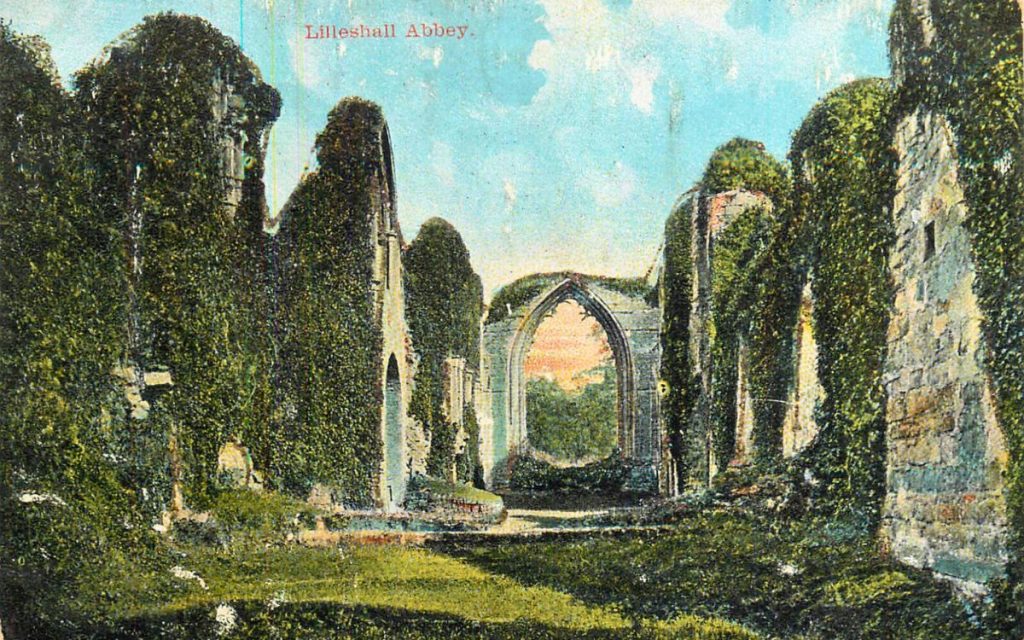
By now Mr Shaw’s dog was straining on its lead to get away, and Mr Shaw glanced down at the dog for a second, then back up, only to find himself alone in the abbey with no trace of the monk he had just spoken to.
The monk would appear to have made his presence known in other ways too, as prayers have been heard being recited in a foreign tongue by an unseen worshipper and a number of people have spent the night at the abbey and recalled hearing footsteps.
One in particular recalled how they heard soft, slow footsteps walking around the cloister at 12.20am, and when a torch was shone on the path no one was to be seen.
The monk may not be alone, as one report also speaks of someone encountering a female apparition.
What is the secret?
Exactly what the secret that the ghostly monk alludes to has been the cause of much speculation.
Some suspect that murder took place at the abbey, although there is no agreement on either the victim or the perpetrator.
Some point the finger at King Henry III, who it is claimed attempted to raise money while at Lilleshall by selling titles and offices, including that of sheriff.
Word of this reached the serving sheriff, who rode to Lilleshall to dissuade the king from his current course of action, and it is said that the sheriff never left the abbey.
Others claim the victim was one of the monks who had fallen foul of the Augustinians’ strict discipline, or maybe he was a victim of the strife experienced by the abbey in its early years.
Whoever the victim was, it is said that their blood can still be seen on the floor of the passageway that sits between the sacristy and the chapter house.
To add more colour to the stories of murder, screams and moans have been heard coming from the abbey after dark.
According to those who have heard them they sound like someone being tortured, with one describing them as “an awful groaning, a deep rumbling noise like thunder, then a high screaming noise”.
National attention for Lilleshall Abbey haunting
In 1932 the haunting at Lilleshall Abbey reached national attention.
When the then custodian was so disturbed by sounds that seemed to come from underneath the abbey, he wrote to newspapers offering a reward to anyone who could find the secret tunnel which allegedly ran from the abbey to nearby Longford Hall.
He reasoned that if the tunnel could be found, then the ghosts laid within could finally be put to rest.
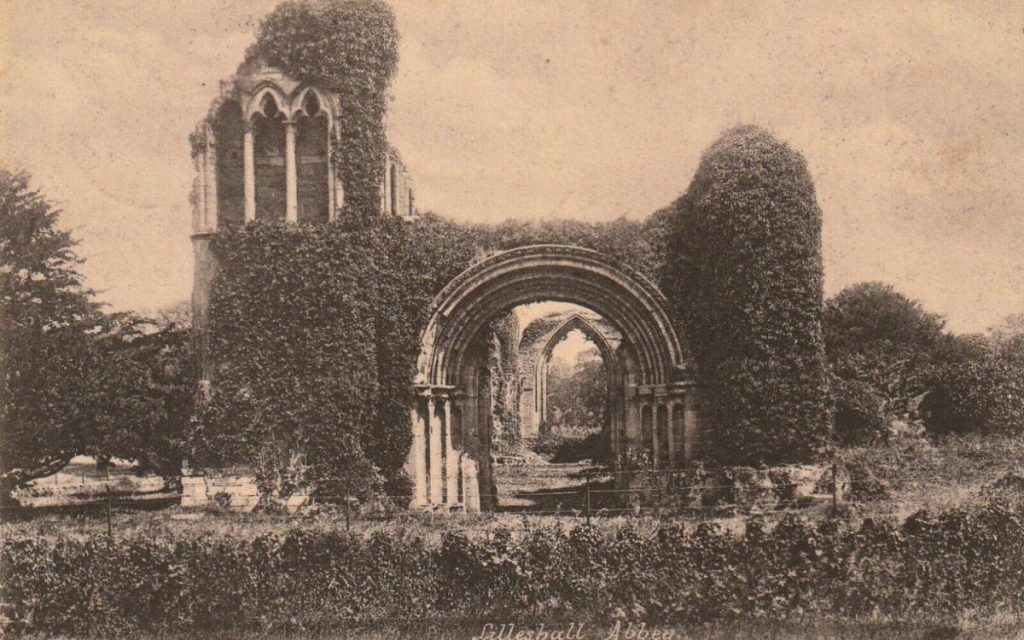
Writing in her 1883 book ‘Shropshire Folklore, a Sheaf of Gleanings’, Charlotte Burne wrote of the alleged passage, claiming that although no one could then place where it was, within living memory it had been open and accessible.
By the 1930s though it had clearly been lost completely.
The appeal in the newspapers led to a range of people, from archaeologists, dowsers, and engineers, descending upon the abbey, even at one point bringing in specialist boring equipment and electrical devices.
However, the search was in vain and no underground passage from Lilleshall Abbey has been confirmed.
It should be noted that there are a number of mines in the area, and in the 1960s substantial work was carried out at the abbey which was by then suffering the effects of subsidence.
Maybe there is a link between noises seeming to come from beneath the abbey, and the presence of relatively shallow mines?
Whatever the truth is, it would appear that Lilleshall Abbey is in no hurry to reveal its secret.
GEORGE HEINZ was born in Wolverhampton and has a long-standing interest in the paranormal, particularly hauntings and cryptozoology. He is a Methodist minister based in Shropshire, where he lives with his family. In his spare time, he enjoys playing the trumpet, painting, and watching classic horror and science fiction films.