

British folk songs are hardly known for happy families, but Lucy Wan takes domestic unpleasantness to an entirely different level.
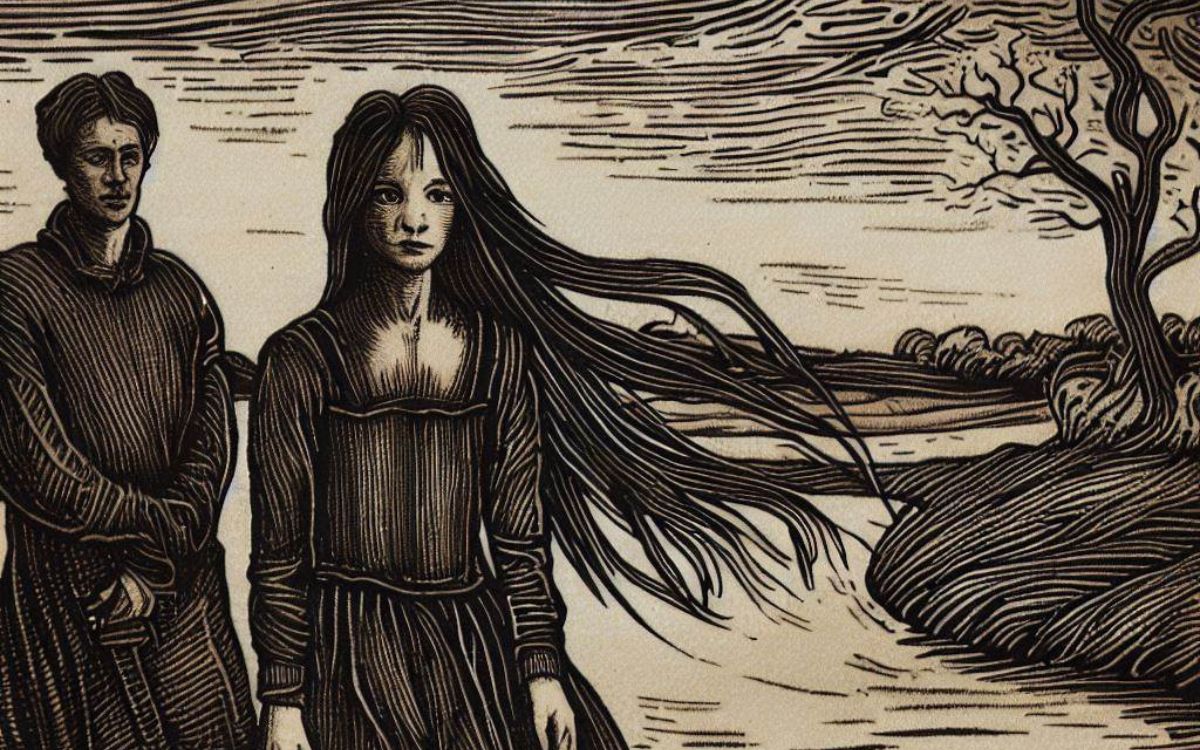
Also known as Lizie Wan, Lucy Wan and Fair Lizzie, the ballad tells of a young woman who becomes pregnant by her own brother.
When he discovers she is carrying his child, their confrontation ends with him murdering her before attempting to flee the country.
Nobody knows exactly how old the song is, although it was certainly circulating in Scotland by the late 18th century. Robert Burns knew a version, while Scottish antiquarian Robert Jamieson later published Lizie Wan in his Popular Ballads and Songs in 1806.
Francis James Child included the song as Child Ballad No. 51 in The English and Scottish Popular Ballads during the 19th century. Modern folklorists also catalogue it as Roud Folk Song Index No. 234, with different versions surviving in Britain and North America.
The story usually begins with Lucy or Lizie Wan in obvious distress, and her brother immediately wants to know what is wrong. She eventually tells him that she is pregnant, before revealing something considerably worse: he is the father.
One traditional version has her tell him:
O I have told you once, brother,
And I will tell you again;
You are the cause of all my woe,
And of all my pain.
What follows is remarkably brutal, even by the standards of old murder ballads.
Her brother takes his sword and kills her, leaving Lucy lying dead or dying before returning to the family home. There he encounters his mother, who wants to know why there is blood upon his clothes.
This questioning is one of the strongest parts of the ballad because the terrible truth emerges gradually through their conversation.
His mother asks about Lucy, and eventually her son admits what he has done. He then announces his intention to escape, usually by taking a ship overseas.
There is no ghostly revenge and no murderer dramatically dragged down to Hell, although some versions suggest punishment is waiting for him. The horror comes almost entirely from the crime itself and the coldness with which the brother attempts to leave everything behind.
The ballad also contains one of the oldest tricks in folk music: the suspicious bloodstain.
Anyone familiar with Edward, another famous Child ballad, will recognise the pattern immediately. Somebody returns home covered in blood, a parent starts asking awkward questions, and increasingly unlikely explanations are offered before the truth finally emerges.
Lucy Wan never became as famous as traditional murder songs such as The Two Sisters or Cruel Mother, perhaps because its central subject remains uncomfortable even by folk-ballad standards.
The song nevertheless survived into the folk revival, where singers were understandably attracted to its stark and thoroughly unpleasant story.
A.L. Lloyd recorded Lizie Wan, while Ewan MacColl and Peggy Seeger also included the ballad in their exploration of traditional British songs. Frankie Armstrong later recorded Lucy Wan, helping keep one of the darker Child ballads in circulation among modern folk audiences.
There is very little decoration in Lucy Wan, and that is probably why the song remains so effective.
A brother gets his sister pregnant. She confronts him with the truth. He murders her, returns home with her blood on his clothes and prepares to run away.
Traditional British folk music rarely worried about whether its subject matter was suitable for polite company.
Lucy Wan proves that our ancestors could come up with material every bit as nasty as anything heard in a modern horror soundtrack.