
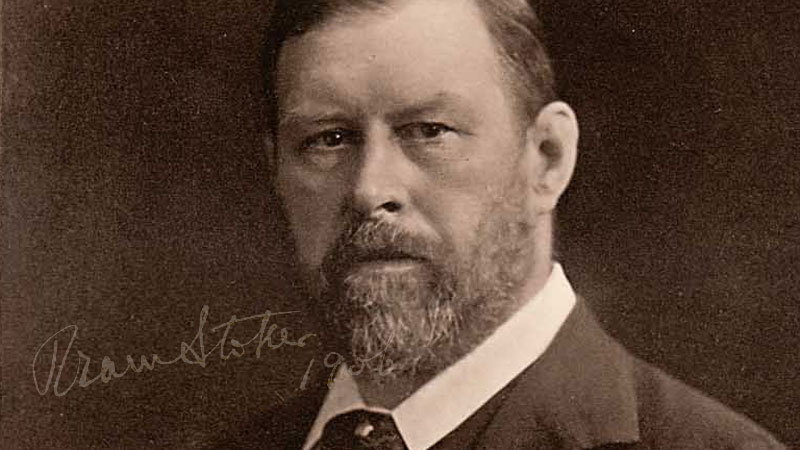
Before Dracula was born on the page, he lived in the nightmares of a sickly Dublin child.
Bram Stoker’s early years in Clontarf shaped not only his own life but also the Gothic novel that would change horror forever.
Bram Stoker, The Bedridden Boy Who Rose from the Dead
Bram was born in 1847 at 15 Marino Crescent, Clontarf.
For the first seven years of his life, he was confined to bed with a mysterious illness. Doctors feared he might not survive.
Then, at the age of seven, he recovered — so completely that he became a robust teenager and later a champion athlete at Trinity College.
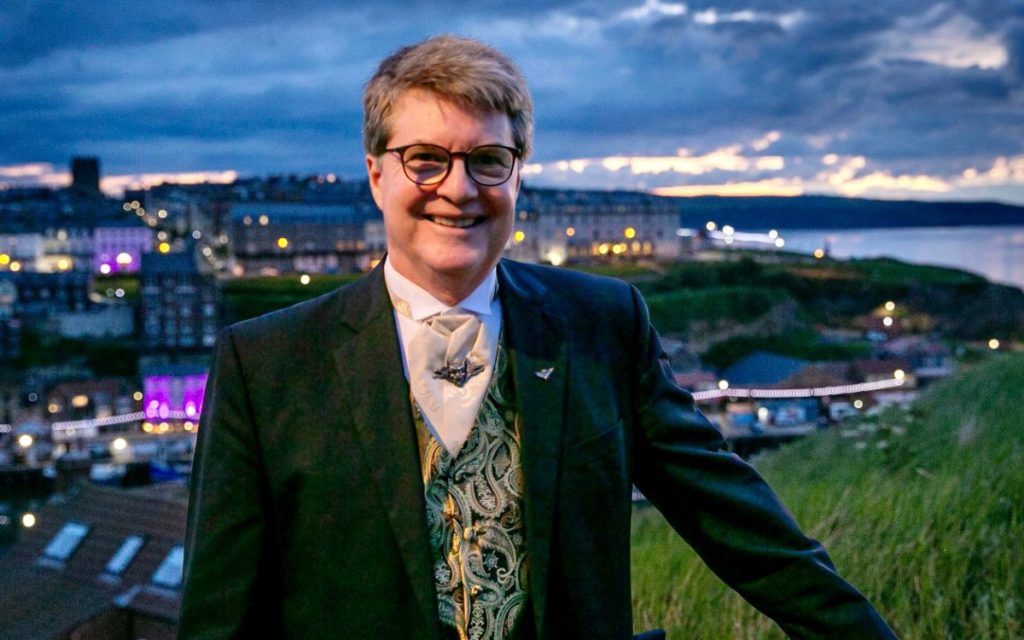
Dacre Stoker, his great-grandnephew, has always been struck by this transformation:
“He went from being an invalid at the age of seven to a big strapping guy at 17. That transformation always fascinated me — it almost feels like something vampiric had touched him.”
In Dracul (2018), the authorised prequel to Dracula, this uncanny recovery is reimagined as something more sinister — as if the supernatural had taken a hand in young Bram’s fate.

Cholera Tales and Premature Burials
While Bram lay in bed, his mother Charlotte became his storyteller.
She had survived the cholera epidemic in Sligo and her memories were terrifying. She told her son about mass graves, plague carts, and people buried alive in their panic-stricken community.
As Dacre explains: “The stories told to him by his mother and nanny were steeped in dark Irish folklore and horrifying accounts of premature burials.”
These tales stayed with Bram for life. The dread of burial and resurrection runs through Dracula, first whispered in the family home in Dublin.
In Dracul, Charlotte appears as a central figure — her grim stories forming part of the novel’s Gothic DNA.
Nanny Ellen and the Fireside Folklore
Alongside Charlotte, family servants and nannies shared Irish folklore — banshees, ghosts, revenants.
In Dracul, one such figure, Nanna Ellen, becomes a shadowy guardian whose stories — and secrets — hint at something more than human.
Dacre describes his process as blending fact and fiction:
“What if Bram came across vampires in a personal way? … I took the real things that happened in his life and made them fictional.”
Through this lens, Dublin becomes the cradle not just of Bram’s imagination, but of Gothic myth.
Library of the Vampire
By 1866, Bram was strong enough to study at Trinity College Dublin.
He also visited Marsh’s Library, where records show he consulted volumes on Eastern European history. One book contained a reference to Vlad Dracula and his brother Radu.
Dacre notes: “One of those books… has a reference to Vlad Dracula and his brother Radu. It could have just been a seed that went in Bram’s head.”
From Dublin’s libraries to Transylvania’s mountains, those seeds took root.
Dublin’s Dark Imprint
The Dublin of Bram’s childhood was a city of contrasts — elegant Georgian crescents overshadowed by disease and poverty.
From his own illness to Charlotte’s cholera tales, from nanny folklore to old library tomes, the city gave him all the raw material he needed to imagine the world’s most famous vampire.
As Dacre puts it: “It was a combination of reality and imagination coming together to make the story seem realistic.”
From a sickbed in Clontarf to the castles of Transylvania, Bram Stoker carried the ghosts of his Dublin childhood wherever he went.
Those early nights whisper through every page of Dracula — and still draw us back to the city where it all began.
Discover Bram Stoker must see sites in Dublin!
Have you experienced the haunting history of Dublin’s Gothic past? Share your thoughts in the comments section!