

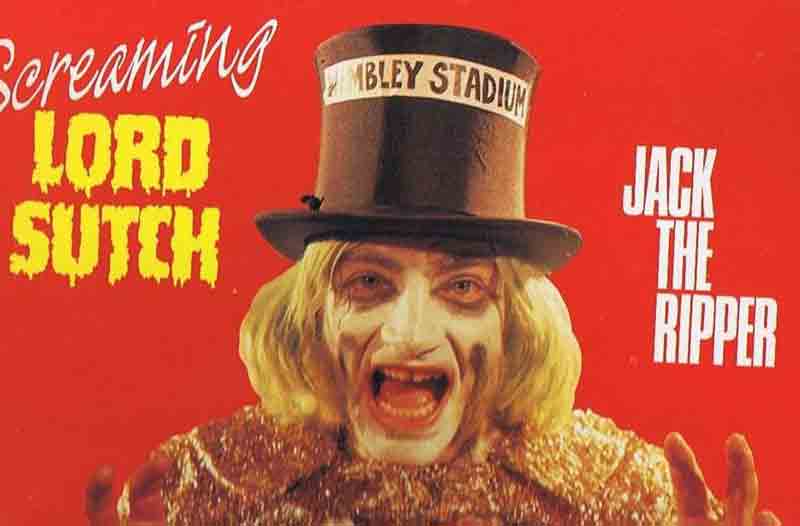
Think of Screaming Lord Sutch and you most likely summon up an image of an eccentric character in a top hat and leopard print jacket, cheekily grinning as he lurks behind some high-profile politician in a by-election.
Born David Edward Sutch in Hampstead in 1940, Sutch formed The Monster Raving Loony Party in 1983 and held the record for the most elections contested, over 40, frequently losing his deposit.
The name Screaming Lord Sutch comes from his days as a pioneer of the British rock and pop scene. It was inspired by American blues singer Screaming Jay Hawkins.
With his backing band The Savages, he was a forerunner of the type of stage show theatrics and horror-trope lyrical material that would later become standard for artists such as Alice Cooper, Ozzy Osbourne and Marilyn Manson.
Dressed in a black cape and top hat, his stage show included props such as coffins, swords, daggers and blood-soaked dummies, accompanied by his trademark scream.
The 1974 film Slade in Flame paid tribute to Lord Sutch’s stage show, with Noddy Holder’s character, Stoker, getting locked inside a coffin during a performance with his band, The Undertakers.
This is said to have actually happened to Sutch himself, while the over-the-top character Jack Daniels, played by Alan Lake, is also thought to be largely based on his persona.
On his own admission, Sutch was never a very good singer. However, his collaborations with legendary maverick record producer Joe Meek gave his career a leg up.
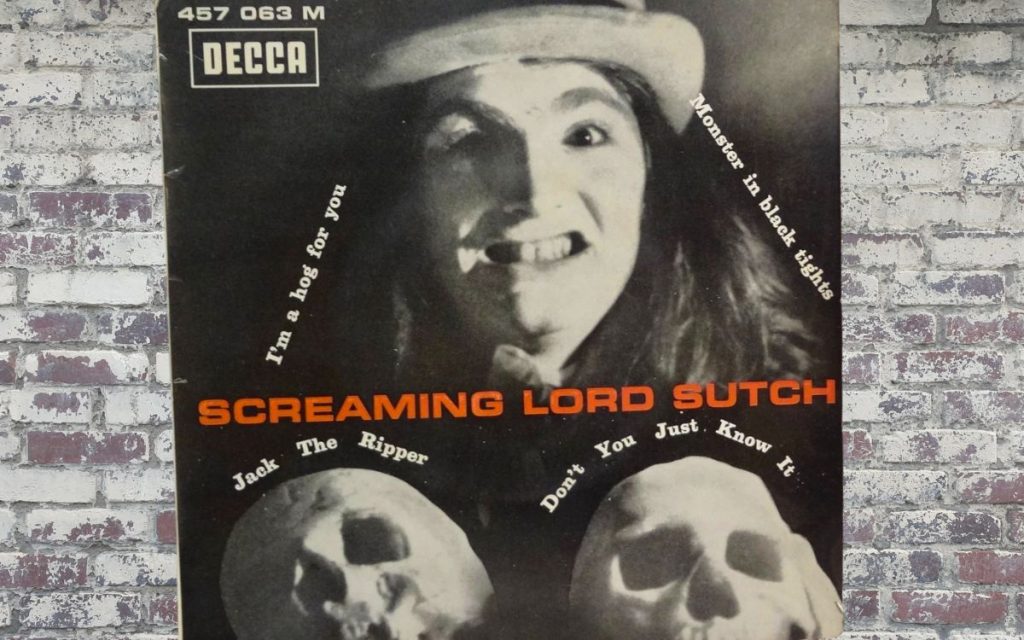
Both Sutch and Meek shared a love of old horror films, and on songs such as Jack the Ripper and Daughter of Dracula, recorded at Meek’s DIY studio in a flat above a shop on Holloway Road, Meek spliced in sound effects such as creaking coffin lids, howling winds and ominous footsteps crunching on gravel to heighten the atmosphere.
The relationship with Meek also gave Sutch access to an impressive pool of session musicians who would later become stars in their own right.
These included Ritchie Blackmore (Deep Purple, Rainbow), Mitch Mitchell (The Jimi Hendrix Experience), Matthew Fisher (Procol Harum) and Chas Hodges (Chas and Dave).
The Who drummer Keith Moon was also a lifelong friend. As a teenager, Moon was mentored by Savages’ drummer Carlo Little, and later often sat in for him as part of the Savages’ line-up at Screaming Lord Sutch gigs.
Other Lord Sutch horror-themed songs produced by Meek included She’s Fallen in Love with the Monster Man, Murder in the Graveyard and Monster in Black Tights.
Due to their graphic lyrical content, singles released by Screaming Lord Sutch and the Savages were frequently banned by the BBC, enhancing his cult credentials as the wild man of rock’s underworld.
The songs were great fun, channelling rockabilly and rhythm and blues, but they hardly set the world alight with their lyrical content.
Til the Following Night, for example, features bats a-flyin’, cats a-sighin’, zombies a-dancin’ and skeletons a-prancin’.
If you are a fan of B-movie horror, look no further than the Lord Sutch back catalogue for a pop and rock equivalent.
In 1970, Sutch invited several big names in rock to back him in a number of jamming sessions at Hollywood’s Mystic Studios.
The line-up included Jimmy Page and Jeff Beck on guitar, Page’s Led Zeppelin bandmate Jon Bonham on drums, Noel Redding of The Jimi Hendrix Experience on bass, and Nicky Hopkins, session keyboard player for The Beatles and The Rolling Stones.
The sessions were completely unrehearsed, and the artists were allegedly shocked to find they had been recorded for the album Lord Sutch and Heavy Friends.
Despite its stellar line-up, it was panned by critics in the music press as the worst album ever recorded.
Sutch pulled off a similar trick with his 1972 album Hands of Jack the Ripper, which includes an extended ten-minute version of the original 1960s three-minute single.
The album cover depicts Sutch in a Victorian-style Jack the Ripper wanted poster.
It is a live album, secretly recorded at the Carshalton Park Rock ‘n’ Roll Festival on 3 July 1971.
Again, the line-up of big-name backing musicians, including Keith Moon, Ritchie Blackmore, Noel Redding and Matthew Fisher, had no idea they were being recorded for a soon-to-be commercially released album.
The Jack the Ripper song also makes an appearance in the 2008 Joe Meek biopic Telstar, with Con O’Neill as the producer and Justin Hawkins, lead singer of The Darkness, as Sutch.
The film shows the sessions where Meek had Sutch record the song in the toilet of his flat to increase the echo, and how he experimented with adding horror sound effects.
It also recreates the publicity stunt where Sutch performed Jack the Ripper in a record shop and attacked audience members with a rubber knife.
The Telstar biopic closes with the notorious incident in which Meek accidentally shot his landlady during an argument at the makeshift studio, before taking his own life.
Twenty years later, Sutch followed his mentor, tragically taking his own life on 16 June 1999, aged 58.
However, the legacy of the Sutch and Meek horror rock collaborations lives on in the songs they recorded on Holloway Road.
Top 10 Spooky Lord Sutch & Joe Meek Playlist
- Jack the Ripper
- Dracula’s Daughter
- She’s Fallen in Love with the Monster Man
- All Black and Hairy
- Murder in the Graveyard
- Monster Rock
- Rock and Shock
- Screem and Screem
- Monster in Black Tights
- Til the Following Night