


There are places where you go looking for ghosts, and there are places where the landscape itself seems haunted. Lough Gur in County Limerick is very much the latter.
Dominated by the horseshoe-shaped lake beneath Knockadoon Hill, people have lived here for thousands of years, leaving behind settlements, burial places, stone circles, castles and churches.
Between those layers of history grew another landscape altogether, one inhabited by fairies, giants, goddesses, magicians and the restless dead.
This is why Lough Gur is sought out by paranormal investigators, folklorists, history buffs and the curious.
When you investigate Lough Gur, you aren’t investigating a single haunted building.
Teams like my own (Irish Paranormal Investigations) follow a trail through thousands of years of belief, beginning among some of Ireland’s most extraordinary prehistoric stones.
Grange Stone Circle
Grange Stone Circle stands about 300 metres from Lough Gur. Measuring approximately 46 metres across and comprising 113 contiguous stones, it is the largest stone circle of its type in Ireland.
Its Bronze Age builders clearly chose the site with care. Excavations uncovered thousands of pottery fragments and animal bones, evidence that people gathered here in considerable numbers.
A posthole at the centre suggests the circle was measured from a central point, while the entrance and stones opposite have been linked with the setting sun around Samhain.
One particularly imposing stone is traditionally associated with Crom Dubh, a mysterious figure entwined in Irish folklore with harvest customs, older beliefs and later legends of Saint Patrick.
Long after the original purpose of Grange was forgotten, people continued to treat ancient monuments with caution.
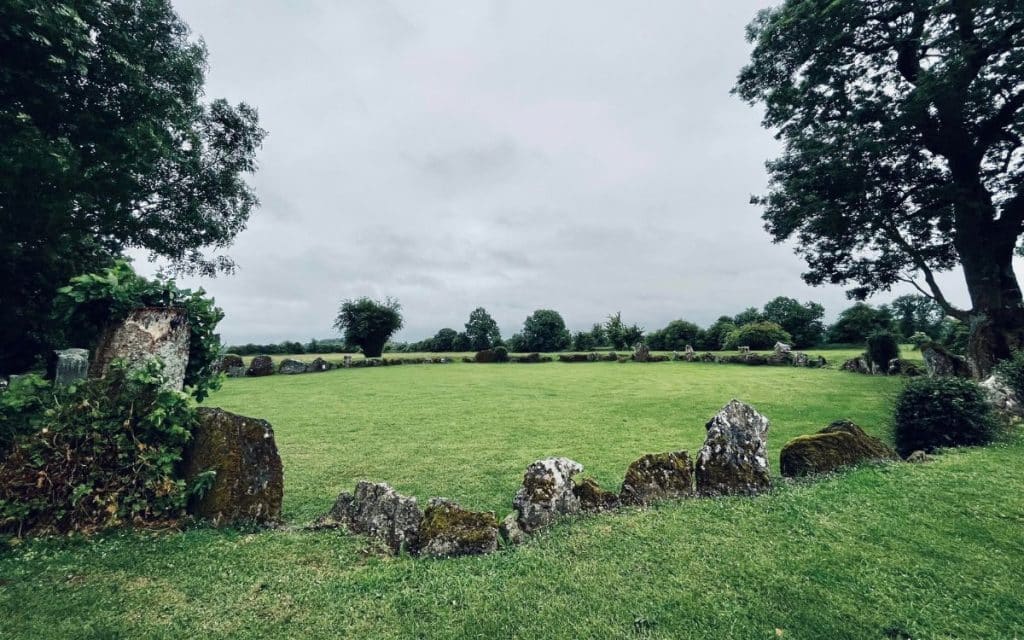
Local folklore tells of fairy places that shouldn’t be interfered with and the misfortune that could follow those who ignored the warning.
One disturbing tradition tells of a boy left inside a stone circle who was found asleep and, according to the tale, never walked again. The fairies were blamed.
Just on the edge of the circle stands a crooked fairy tree, bedecked with rags and scraps of ribbon — wishes of healing and protection bound around each one.
To generations living beside these monuments, ancient stones weren’t archaeological attractions — they belonged to something else.
There is a feeling here, of being watched by something old, something powerful and something you dare not disrespect.
I found my feet firmly rooted to the spot, refusing to move through the two stones closest to the fairy tree and out of the circle. It was as if the circle was protected and evil awaited on the other side. I chose to leave by a different path…
The Giant’s Cave
The Lough Gur Wedge Tomb has an elevated position above the surrounding landscape, vacant eyes looking out over the lough. Known as the Giant’s Grave or Giant’s Cave, excavations in 1938 uncovered cremated and unburnt remains representing at least eight adults and four children, along with pottery and flint.
Standing before it, you are not simply looking at an ancient monument. This is a mass grave — however, the entity that seems to remain appears to be much more recent.
During the early part of the 19th century, a woman is said to have made the relatively weatherproof interior of the tomb her home. Stories say she was destitute, had no family or was someone society preferred not to see.
The details have been swallowed by time, leaving only the extraordinary fact that a living woman apparently made her home among the prehistoric dead.
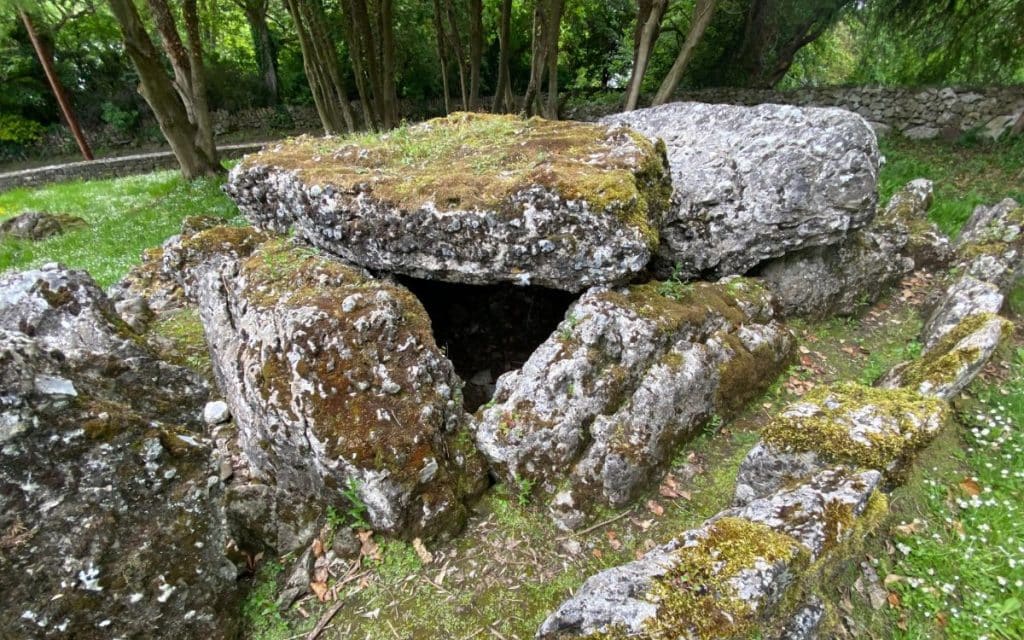
Later treasure seekers reportedly disturbed the monument searching for riches, damaging one of its great stones. They found no treasure and, inevitably, local folklore claims they had little luck afterwards.
It was said to be not the voices of the ancient corpses, but the voice of the woman who resided with them — furious that strangers were stealing from her home.
This is a place where the air seems heavier and extraordinarily still. As I called out to the ghosts of the past, a lone crow called from a nearby tree — yet otherwise there was remarkably little sound.
That said, sound is only one way the spirits make contact, and our investigation certainly yielded more than a few eerie occurrences we couldn’t explain.
From Ancient Tomb to Christian Graveyard
Teampall Nua, or the New Church, is another layer in Lough Gur’s long relationship with its dead. Despite its name, there is little new about it. A church existed here by the late medieval period and was restored during the seventeenth century before eventually falling into ruin.
Walking through the ruins and gravestones, the atmosphere grew decidedly heavier the closer to the edge of Lough Gur that I stepped. Was it because I was stepping further away from Christianity and into something far darker and ancient?
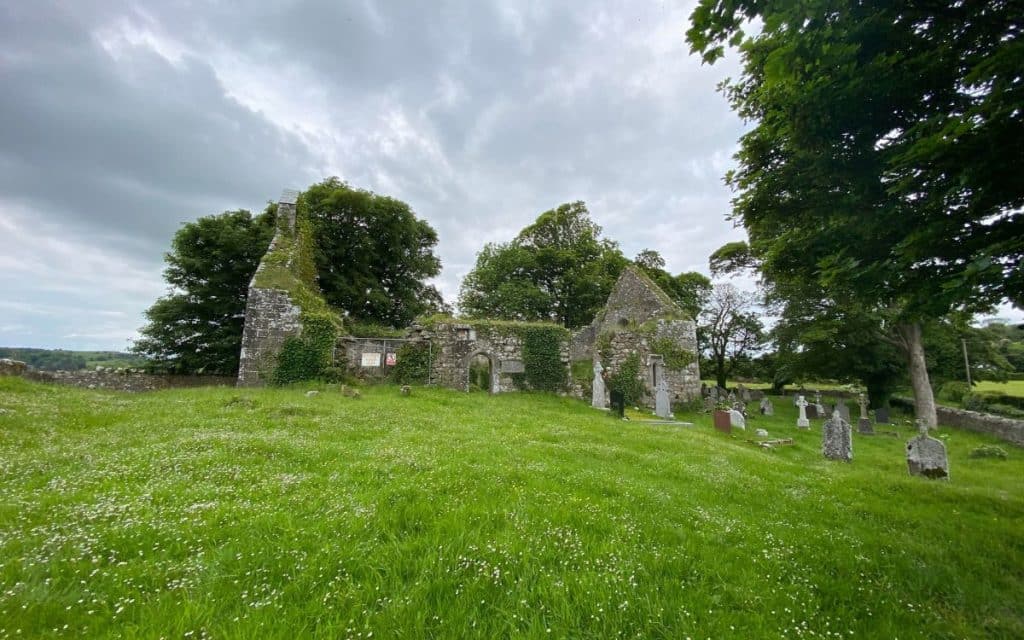
Moving between these sites is what makes Lough Gur extraordinary. At the Giant’s Grave, prehistoric communities placed their dead within a great stone monument. At Teampall Nua, later generations buried theirs in consecrated Christian ground.
Different religions, different rituals, different centuries, but the dead remained.
For a paranormal investigator, that is perhaps more interesting than a single ghost story. Lough Gur isn’t one building with a tragedy attached. It is an entire landscape upon which successive generations have placed their own understanding of life, death and whatever comes afterwards.
Gods, Fairies and an Enchanted Earl
Some of the older beliefs proved remarkably difficult to kill.
Lough Gur is closely associated with Áine, one of Ireland’s great female supernatural figures.
Linked particularly with nearby Knockainey, she appears repeatedly in folklore as a goddess, fairy and queen of the Otherworld.
Over centuries, her traditions became entwined with the Fitzgerald family and another extraordinary resident of Lough Gur. Gearóid Iarla, Gerald FitzGerald, third Earl of Desmond, was a real fourteenth-century nobleman and poet, but legend turned him into a magician.
Rather than dying conventionally, Gearóid supposedly sleeps in an enchanted state beneath Lough Gur.
Every seven years he is said to emerge from the water astride a magnificent white horse wearing silver shoes and ride around the lakeshore. Each journey wears the silver a little thinner. When the shoes finally wear away, the enchantment will break and Gearóid Iarla will return to the mortal world.
Other traditions tell of a mysterious woman emerging from Lough Gur to sit beside the water and comb her hair with a golden comb. Again and again, the folklore surrounding this small corner of County Limerick suggests a boundary between our world and another that isn’t quite as solid as we might like to believe.

Is Lough Gur Haunted?
After investigating it, I’m not sure haunted adequately describes Lough Gur. I cannot prove that prehistoric spirits remain beside their tomb, that fairies inhabit Grange or that an enchanted earl sleeps beneath the lake.
Neither can I prove that the responses the team received came from the mysterious woman who once lived inside the Giant’s Grave. What happened was so much more intriguing because it wasn’t so easily explained, and this is why we and others like us continue to investigate.
What isn’t in doubt is that people have regarded Lough Gur as significant for thousands of years. They lived here, gathered here and buried their dead here. When the meaning of the oldest stones was forgotten, stories filled the silence with giants, fairies, goddesses, magic and ghosts.
Standing beside the lake after following that trail through the landscape, the centuries seem to fold in on one another. Perhaps that is the real haunting of Lough Gur.
The people are gone, their rituals forgotten and even their gods have changed — yet something about this ancient corner of County Limerick has never stopped inspiring the feeling that we aren’t quite alone.