
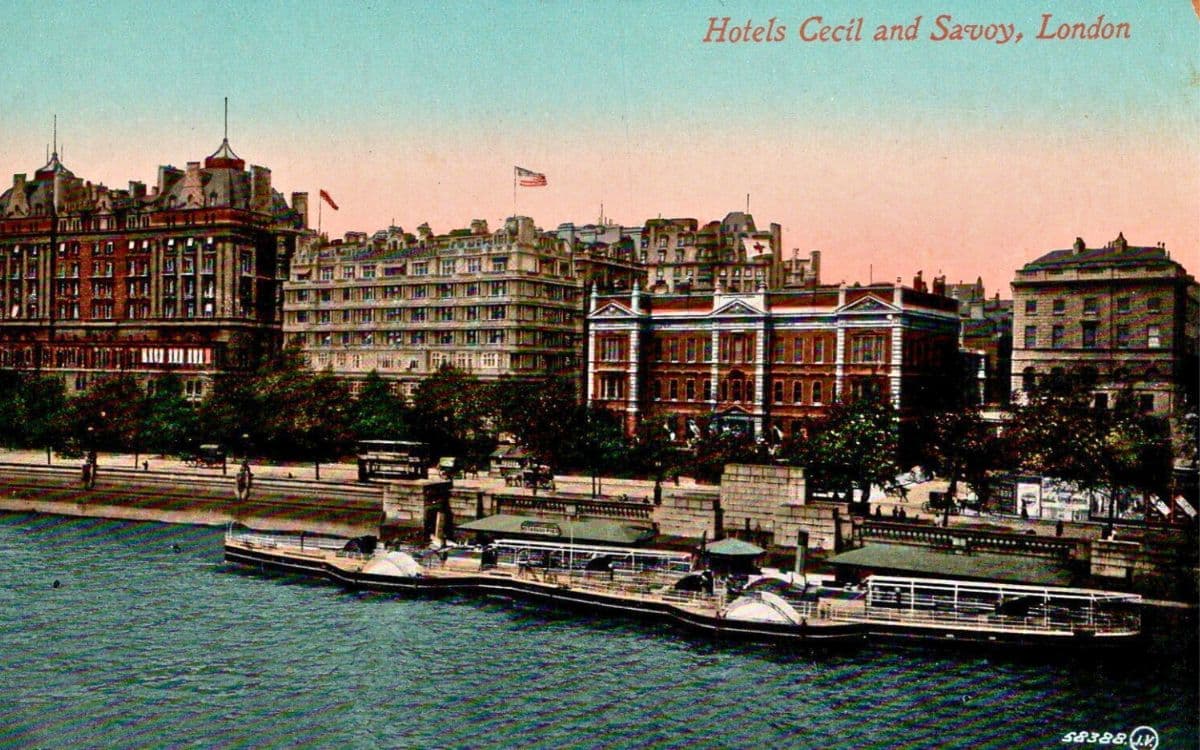
The site where the Savoy Theatre and Savoy Hotel stand on London’s Strand has a long history. The land between the Strand and the Thames was granted by King Henry III to his wife’s uncle, Peter, Count of Savoy, in 1246.
Peter built the Savoy Palace there in the 13th century. During the 14th century it became associated with the Dukes of Lancaster until the palace was burned during the Peasants’ Revolt in 1381.
Henry VII later left money in his will for a hospital on the site. The Savoy Hospital was established in the Tudor period, and the precinct later served several purposes, including military use, before parts of the area declined into poor housing.
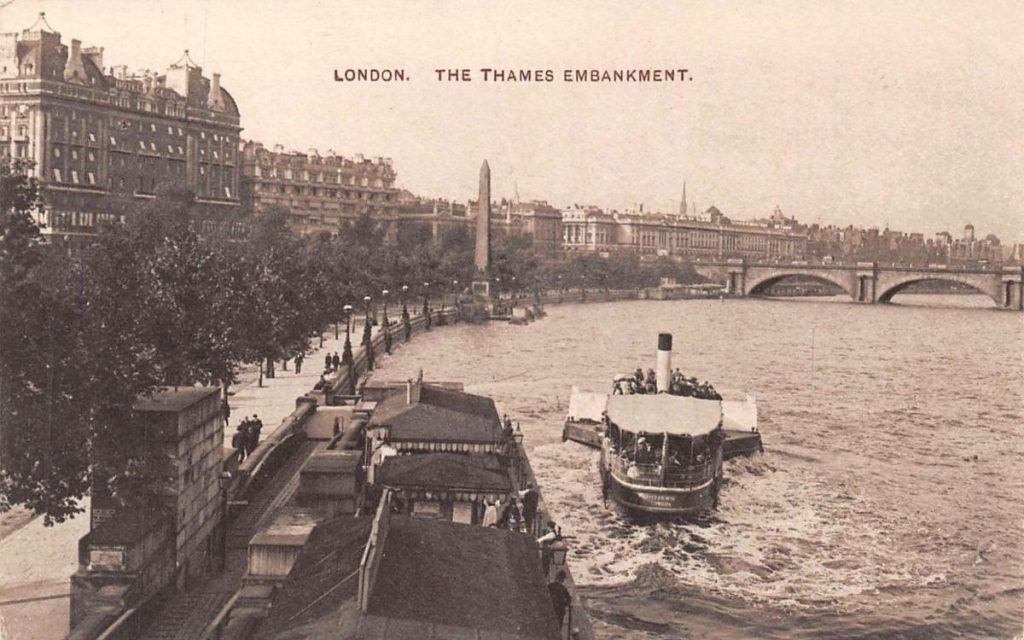
By 1881 theatrical impresario Richard D’Oyly Carte had built a new theatre on part of the historic Savoy site.
Carte wanted a purpose-built home for the Gilbert and Sullivan operas with which he had been associated for more than a decade. The Savoy Theatre opened on 10 October 1881 with a transfer of Patience from the Opera Comique.
The theatre became famous as the first public building in the world to be lit by incandescent electric lights. The auditorium used electricity from opening night, while the stage became fully electrically lit later that December.
Ghosts of the Savoy Theatre
With such unfamiliar technology, it is perhaps no surprise that ghostly stories later attached themselves to the building. Tales grew around flickering lights, strange sensations in the auditorium and unseen presences in the theatre after hours.
The Mikado, first produced in 1885, became the most successful of the Savoy Operas, running for 672 performances.
Ruddigore, or The Witch’s Curse, followed in 1887 and used a host of horror tropes. Gilbert and Sullivan turned the Gothic melodrama into parody, with a cursed line of baronets forced to commit a crime every day or die in agony.
The lead role fell to George Grossmith, the company’s principal comedian. He had started his Gilbert and Sullivan career as John Wellington Wells in another supernaturally themed opera, The Sorcerer.
After a love potion goes disastrously wrong, Wells ultimately sacrifices himself to put matters right.
The Savoy Hotel’s ghost stories
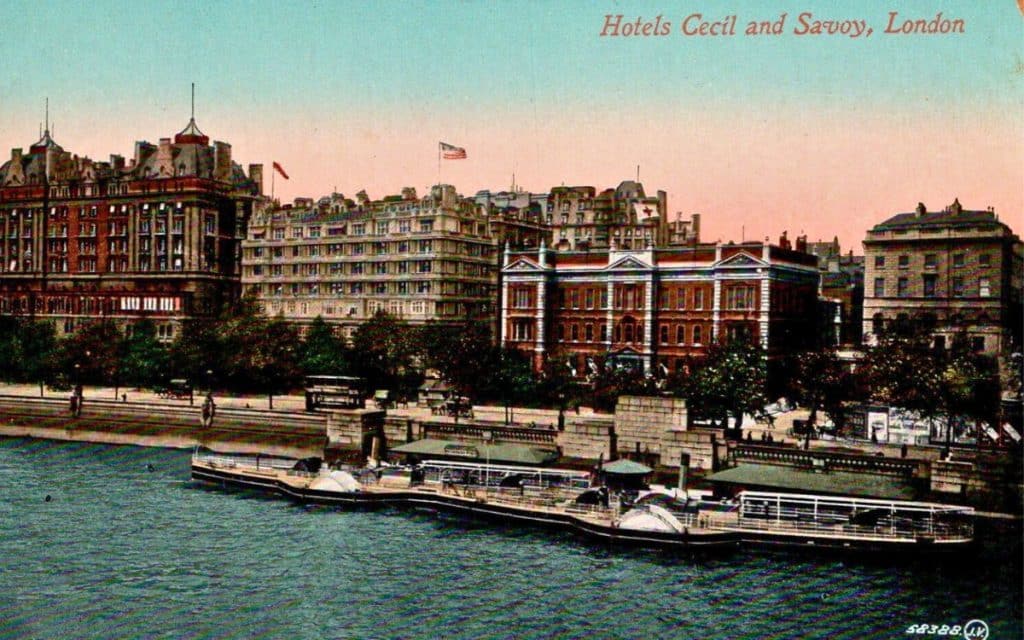
The enormous success of the operas helped D’Oyly Carte expand his interests on the site. The lavish Savoy Hotel opened beside the theatre in 1889.
Over the decades the hotel became a magnet for the rich and famous. As the years passed, both theatre and hotel generated their own ghost stories.
Stagehands have been said to experience sudden cold spots or the unnerving feeling of being watched from the royal boxes or the back of the stalls during technical rehearsals.
Other stories tell of faint applause, distant laughter or unseen movement in the upper circles and corridors after hours. Some versions connect these disturbances with the Gilbert and Sullivan era and even with the spirit of D’Oyly Carte keeping watch over his investment.
There is an important correction to one story often repeated around the Savoy circle. Arthur Sullivan did not drown at Grim’s Dyke in Harrow.
It was W. S. Gilbert who died at Grim’s Dyke in 1911 after collapsing in the lake while helping a young swimmer. Sullivan had died in Westminster in 1900 following bronchitis and heart failure.
The Savoy Hotel itself has a reputed fifth-floor ghost. A published paranormal tradition describes a spectral young girl and links her with a mysterious lift.
Over the years that basic story has grown into tales of strange lift movements, chilly draughts and unexplained activity around the upper floors.
Kaspar and the unlucky 13
The hotel is also famed for Kaspar the Cat, the three-foot wooden figure used as a 14th guest when 13 people dine together.
The legend begins with South African mining magnate Woolf Joel. In 1898 he arranged a Savoy dinner for himself and 13 guests, but one guest cancelled, leaving 13 at the table.
When Joel rose first, the old superstition about the first of 13 diners to leave the table was pointed out to him. A few weeks later he was shot dead in his office in Johannesburg.
The Savoy initially dealt with the superstition by supplying a staff member as a 14th diner. In the mid-1920s the hotel commissioned designer Basil Ionides to create Kaspar, carved from a single piece of plane tree. Kaspar is still part of Savoy tradition today.
Oscar Wilde at the Savoy
Oscar Wilde also has an important place in Savoy history. The author of The Picture of Dorian Gray and The Canterville Ghost stayed at the hotel with Lord Alfred ‘Bosie’ Douglas in adjoining rooms 361 and 362 in 1893.
Their relationship later became central to Wilde’s catastrophic legal battle with Douglas’s father, the Marquess of Queensberry. Wilde was eventually convicted of gross indecency in 1895 and sentenced to two years’ imprisonment, much of it served at Reading Gaol.
Horror stars and the Savoy
The hotel also has connections to horror cinema.
The Tivoli, farther along the Strand, became an important West End picture house. Accounts of the making of The Invisible Man in 1933 also place director James Whale and screenwriter R. C. Sherriff at the Savoy with H. G. Wells as they sought the author’s reaction to their adaptation.
Vincent Price was another horror great closely associated with London hotels and the Savoy appears in surviving correspondence written on its headed stationery. One such letter has even appeared at auction.
Hammer Films also used the Savoy for publicity and industry events during its heyday. Ingrid Pitt, star of The Vampire Lovers in 1970 and Countess Dracula in 1971, was among the studio’s defining horror stars.
Christopher Lee later received a Lifetime Achievement award at the Evening Standard British Film Awards held at the Savoy in February 2002.
Back at the Savoy Theatre, Basil Rathbone appeared there in The Sin of David in 1914. He returned in 1920 for Peter Ibbetson.
Rathbone would, of course, become one of horror cinema’s familiar faces, with credits including Son of Frankenstein, The Black Cat, Tales of Terror and the parody The Ghost in the Invisible Bikini.
