Death Line Soundtrack from Wil Malone

Death Line Soundtrack from Wil Malone 2

DOM COOPER tells us about Wil Malone’s eerie main theme from the British 1972 Donald Pleasence horror classic Death Line.
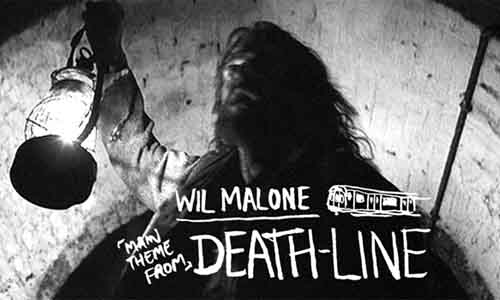
Death Line Soundtrack Will Malone

Have you ever stood on an empty underground platform and looked into the dark of the tunnel? Hearing scrapes and scuttles coming from the black. You see faint lights flash, and sparks. Noises echo around the empty platform. A rat darts on the rail out of the corner of your eye, and you recoil.

But would you expect to see a hand emerge from that black hole, grabbing, reaching out?

Imagine the descendants of Victorian builders, the very men and their families who built the underground. Now imagine they had become trapped in disused lines deep among the winding networks that rumble below the streets. They are living right under your feet as you walk to work.

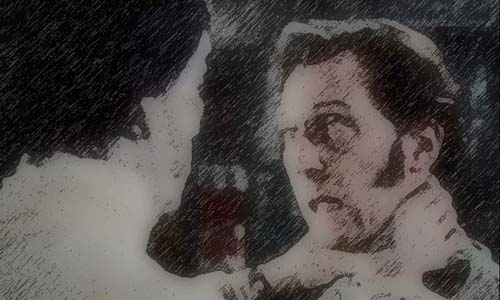
They had intermingled and bred, living off passengers. Snatching them and taking them back to their horde to feast upon the flesh. Imagine the cannibals living zombie-like within those dark tunnels. Coming out slowly, creeping up and dragging you back for supper.

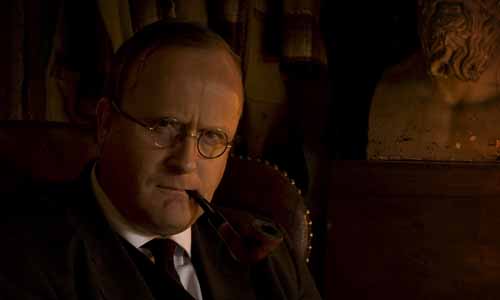
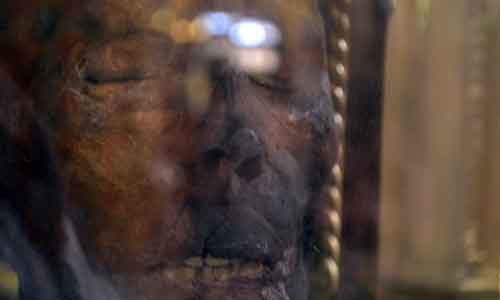
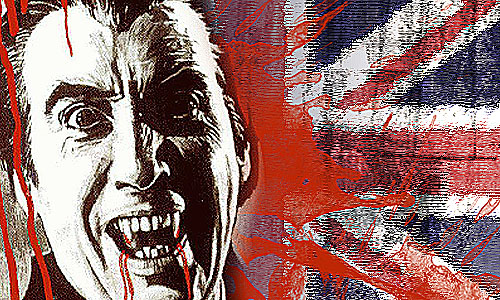
This is the premise of the 1972 British Horror film Death Line. Also called Raw Meat in the U.S. (with added gore). It starred Donald Pleasence and Christopher Lee.

Now I tell you, this slink of horror needs a soundtrack.

Death Line soundtrack

The main theme is a pounding, foot stomp, with a lame leg dragging behind. A dirty synth hit that stalks you. Accompanied by crashing cymbals, shaking percussion and drums. A jazzier organ scuttling in the background. Suddenly a string stab breaks in. Adding urgency. The tune picks up and then tumbles to a false stop, the strings scraping harder. Yet all the time, that evil synth keeps on hitting the concrete and following you. Getting nearer. Things get jazzier. Then at the very end the strings change and bring in a more ominous tone, just before leaving. Leaving you with the feeling of dread, as things become fuzzier. Blurring out of focus.

Who was the composer of this piece?

I present Wil Malone.

Who is Will Malone?

He started out in a skiffle group in 1959, The Rob Storm Group. Various singles for Decca, Columbia and Piccadilly didn’t quite lead them to success, but they toured with Helen Shapiro and soldiered on until 1966. In the midst of the times they renamed them selves Orange Bicycle. Adopting a swirling psychedelic pop sound with group harmonies. Their first single ‘Hyacinth Threads’ was a number one hit in France, and they performed at the Isle of Wight festival. Releasing their eponymous album soon after. Success didn’t quite come and hey broke up in 1971.

Subsequently Wil made an album called ‘Motherlight’. It was recorded in 1969 with Mike Bobak and Andy Johns (misspelt as Jons on the sleeve). Just a studio project for the guys.

The album is filled with spooky psychedelia, eerie sounds and had prog tendencies. After that Wil released a solo album on Fontana in 1970. The album named simply ‘Wil Malone’  consists of thoughtful Baroque pop, highly orchestrated.
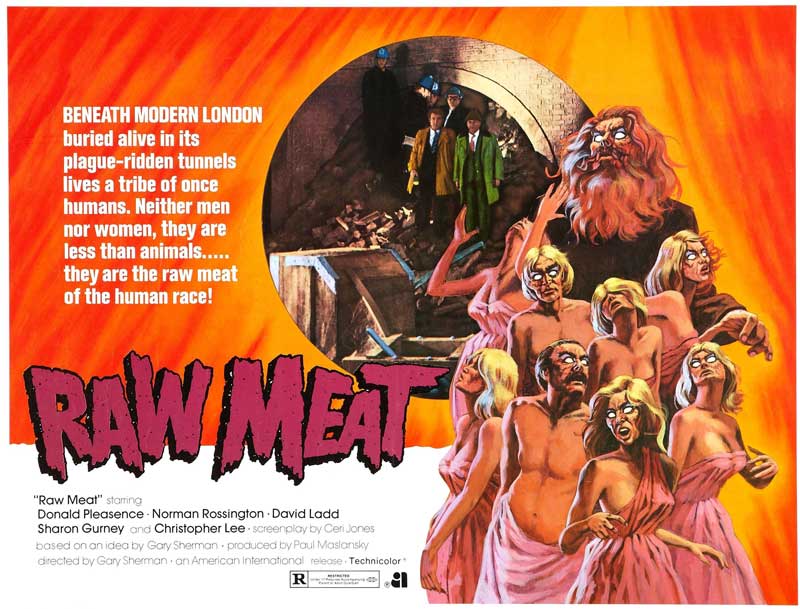
Death Line aka Raw Meat

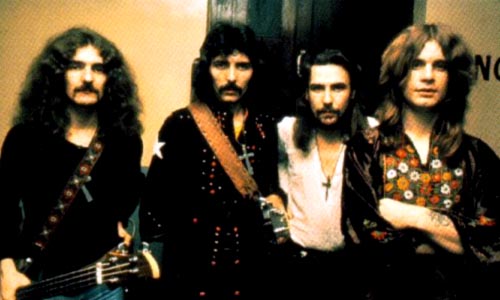
Following those forays into the music of the time, Wil went on to forge a career as a producer and arranger. He scored both the symphonies, bittersweet and unfinished, and has worked with Black Sabbath, U.N.K.L.E., Gomez, Kylie Minogue, Massive Attack, The Verve and many more.

Back to 1972 though. Wil wanted to create a soundtrack that represented the horror of the film. A melting pot of weird rhythm and blues, the type that swung, mixed with the squelchy alien sounds of early electronica. It was those ideas that gave birth to the theme tune. Elsewhere in the film, Wil mixed symphonic elements with raw synth sounds. Keeping up the intensity.

Death Line’s lingering sound may be its cannibal scream of ‘Mind the doors’. But Wil’s theme tune still sloshes around your head long after the film ends.

DOM COOPER is a graphic designer, illustrator and writer. He co-runs Rif Mountain Records and plays in The Straw Bear Band. Previously he played in The Owl Service, The Fiends and Wolfgang & The Wolf Gang. Dom is obsessed with music, and is interested in British folklore, history and culture. Follow him at @domcooperdesign | Find him at www.domcooper.com

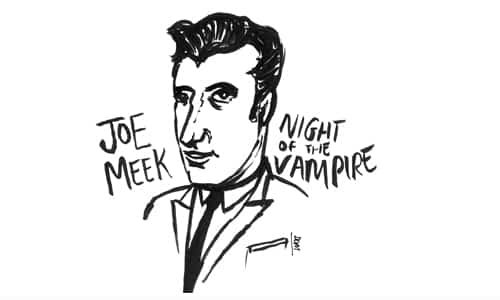
Joe Meek’s Night of the Vampire

Joe Meek's Night of the Vampire 7

Today, we begin our new regular column SPOOKY SOUNDS SUNDAY with DOM COOPER charting some of the spookiest horror and supernatural-inspired songs and the artists behind them from the UK and Ireland. First one off is the tragic tale of Joe Meek and his song, “Night of the Vampire”.

Joe Meek, Night of the Vampire

What do you do when you’re in need of inspiration for a song? Hold a séance, of course. Dim the lights low, sit round the table in a circle and grip the Ouija board tightly. Then invoke the spirits and ask your musical hero, Buddy Holly, to show you a sign.

Meet Joe Meek, maverick record producer.

Born in the West Country in the 1920s, Joe became fascinated by electronics at an early age, hoarding old circuit boards in his parent’s shed. He joined up as a radar operator in the RAF and subsequently worked for the Midlands Electricity Board before becoming a recording engineer for radio in London.

While there he tinkered with a record called the ‘Bad Penny Blues‘; compressing the piano against composer Humphrey Lyttleton’s wishes. The record went on to be a hit and Joe’s production was deemed the reason.

Backed with the funding of a Major Wilfred Alonzo Banks, he left and set up his own label, Triumph records.

Using the money to create a home recording studio, Joe transformed a three-floor flat above a leather goods shop in to a warren of snaking cables and noise.

304 Holloway Road in Islington (now adorned with a Black Plaque) was the place where he created other worlds with his sound techniques.
He was obsessed with getting the right sound for each song – experimenting with singing in the bathroom to get echo and distorting signals to alter them. He pioneered multiple over-dubbing, close miking, use of effects such as echo and reverb, sampling and processing and other inovations. He was a rising star, doing things his way.

A complex individual, he had both luck and misfortune. Conflicted by his homosexuality in a time when it was illegal. He took too many drugs, and spiralled into paranoia.

Meek was obsessed with the occult. As well as dabbling in séances, he would often visit cemeteries late at night with a tape recorder and try and capture the sounds from the aether – straining to hear the voices from beyond the grave against the wind. One evening he captured the haunting wail of a cats meow, and was convinced it was crying out in a human tongue ‘help me’.

In 1961, he took on a new instrumental group, renaming them the ‘Moontrekkers’.

The first thing they recorded was an instrumental written by guitarist Gary Leport. They called it ‘Night of the Vampire’. The track featured Peter Knight on clavioline, and Joe himself screaming at the end of the record. Released on the Parlophone label, the song was banned by the BBC because it was ‘unsuitable for people of a nervous disposition’. It still rose to number fifty in the UK singles chart.

With its door creak start of a coffin lid opening, the track whooshes into life via some tape effects sounding like eerie wind. A deranged guitar twangs. Then a gallop of a beat breaks in and a bouncy guitar line carries the tune along. The guitar echoed by the keyboard, before it all ends with the blood-curdling scream from Joe. It has a genuine otherworldly spook that is of its time, yet unsettling.

Meek was a kind of vampire himself – working twilight hours. Whilst feeding off the talents of a succession of session men, wearing sunglasses and shunning daylight.

The next year, he had a huge hit with ‘Telstar’, but from there on it was a gradual descent. He was convicted of ‘importuning for immoral purposes’ and later he was accused of plagiarising the melody to ‘Telstar’, apparently stealing it from a French record ‘La Marche D’ Austerlitz’. His rising star was fading. Finally on 3rd February 1967 Meek took a shotgun, and after shooting his landlady Violet Shenton, he killed himself.

The ruling came through that he didn’t steal the ‘Telstar’ melody, but it was too late.

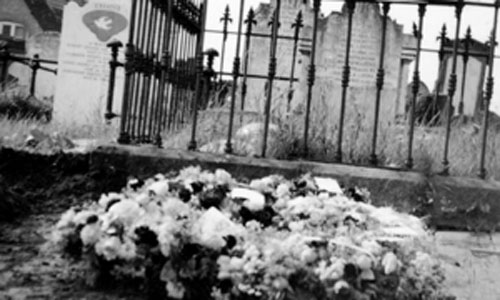
He is buried beneath a black granite tombstone in Newent, Gloucestershire.

Listen to Night of the Vampire by Joe Meek

Who was Jack the Ripper?

Who was Jack the Ripper? 12

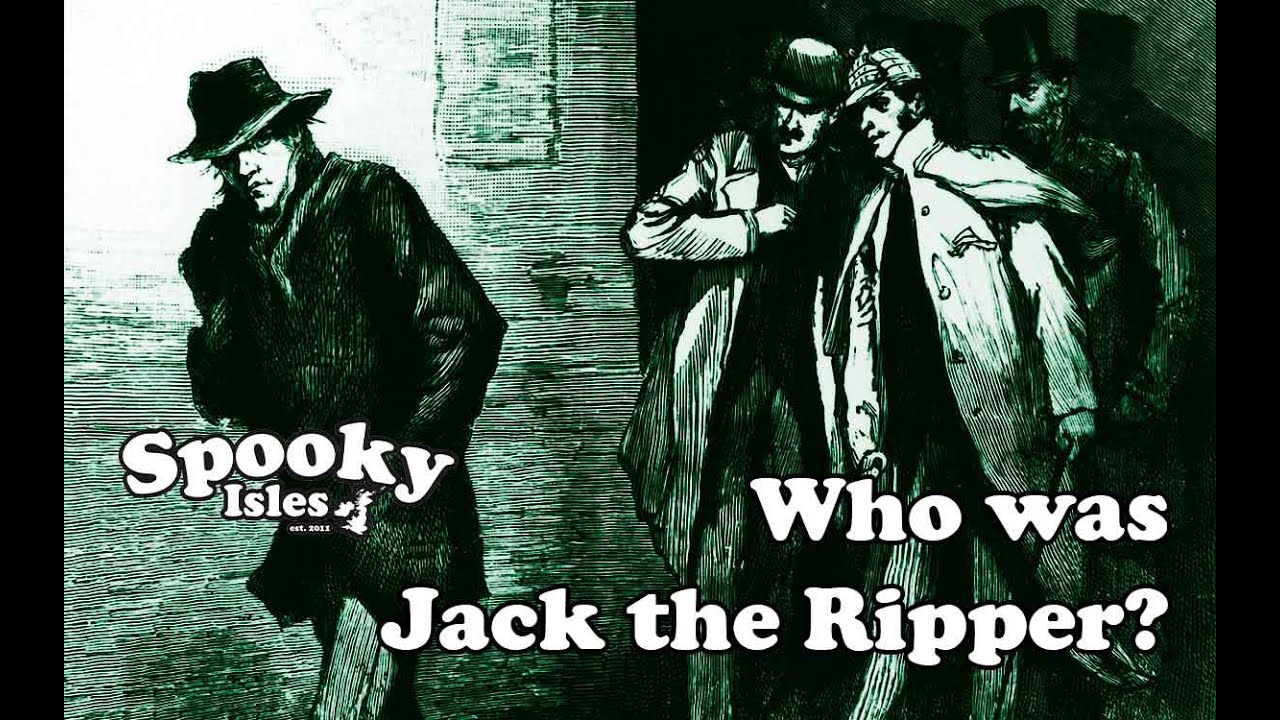
Who was Jack the Ripper? Ripperologist JON REES continues his Spooky Isles series into the Jack the Ripper Murders. Today, Jon outlines the Whitechapel killings with this easy-to-follow explanation of the case.  (Learn this stuff and you can sound like an expert!)

So who was Jack the Ripper?

Put simply – we don’t know. He was a serial killer who killed at least five women in the Autumn of 1888 in the Whitechapel area of London. The motives for which differ depending on the theory – some may say he was sexually motivated, others by revenge and some think that he was trying to cover something up. I’ll discuss my personal theories another time.

The name Jack the Ripper originates from a letter and a postcard sent to the Central News Agency shortly before and immediately after the Double Event. It is now generally agreed these letters were hoaxes.

What did Jack the Ripper do?

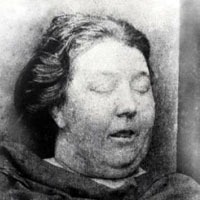
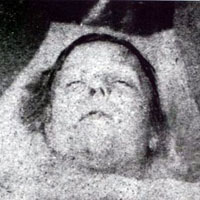
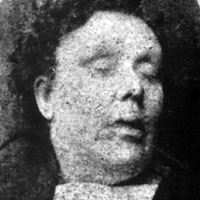
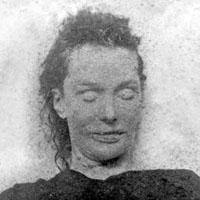
It is generally agreed he killed 5 women – Mary Ann Nichols, Annie Chapman, Elizabeth Stride, Catherine Eddowes and Mary Jane Kelly. These are known as the canonical victims – they were the five victims agreed upon by Police Surgeon DrThomas Bond and later Assistant Chief Commissioner Melville Macnaghten as being killed by the same hand. Some Ripperologists will discount Stride or Kelly, or add in Tabram, McKenzie or Coles.

The following description contains quite graphic details of murder and post mortem mutilation, so you may wish to stop reading at this point.

In order the main possible Ripper murders are:

Martha Tabram
Martha Tabram

Martha Tabram, 8 August 1888

Martha Tabram was found in George Yard with 39 stab wounds to her torso. Was possibly murdered by a soldier she was seen going off with earlier that evening.

Mary Ann Nichols
Mary Ann Nichols

Mary Ann (Polly) Nichols, 31 August

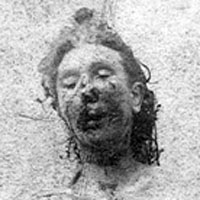
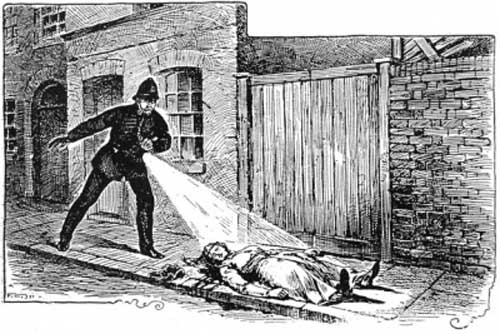
Mary Ann (Polly) Nichols was found in Bucks Row (now Durward Street) with her throat cut. When her body was transported to the morgue it eas discovered she had been mutilated in the lower abdomen region.

Annie Chapman
Annie Chapman

Annie Chapman, 8 September

Annie Chapman was discovered in the back yard of 29 Hanbury Street. Her throat had been cut (with some evidence of prior strangulation), her abdomen had been cut open with her intestines removed and thrown over her shoulder and part of her uterus had been removed.

Elizabeth Strides
Elizabeth Strides

Elizabeth Strides,  30 September
(The Double Event), approx. 12.50am

Elizabeth Strides was body is found in Dutfields Yard, Berner Street. Her throat was cut but there were no mutilations. Some believe that Louis Diemshutz who discovered the body may have interrupted the murder and that the killer was still in the yard hiding when he went to summon help.

Cartherine Eddowes
Cartherine Eddowes

Catherine Eddowes, 30 September
(The Double Event), Between 1.35-1.45 am

Catherine Eddowes is murdered in Mitre Square, City of London. Her throat was cut, intestines removed and placed near the body, her face mutilated with cuts and part of her uterus and a kidney was missing. Part of Eddowes apron stained with blood and fecal matter was found in the doorway of Wentworth Model Dwellings on Goulston Street later that night, beneath graffiti reading “The Juwes are the men that Will not be Blamed for nothing”. Part of a kidney claiming to be from Eddowes was sent to George Lusk of the Whitechapel Vigilance Committee on 16 October. The letter accompanying it had the return address “From Hell”.

Mary Jane Kelly
Mary Jane Kelly

Mary Jane Kelly, 9 November

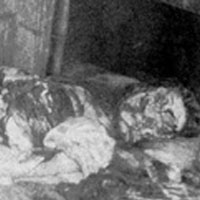
Mary Jane Kelly was the Ripper’s most brutal murder. Found in her room as 13 Millers Court off Dorset Street, she was mutilated beyond recognition. Her arms, legs and face mutilated, her breasts and organs removed and placed around her body, and many believe the killer took her heart.

Alice McKenzie, 17 July 1889

Alice McKenzie was found in Castle Alley with her throat cut and other minor abrasions. Dr Bond believed she was a Ripper victim, but Dr Phillips disagreed.

Frances Coles,  13 February 1891

Frances Coles was found in Swallow Gardens under a railway arch with her throat cut. A man she was seen with earlier in the evening was charged with the murder, but was later discharged from court due to lack of evidence.

Who was Jack the Ripper?
The discovery of Mary Ann Polly Nichols

Why the interest in Jack the Ripper?

To put it simply – the mystery. Ripperologists are amateur detectives at heart, and even those who do not study or theorise directly upon who the Ripper was still will do some detective work – be it trying to identify the unknown origins of Mary Kelly or tracking down a long lost location from old OS maps. Mystery draws us to the case and keeps it alive.