The Rolling Stones and their Sympathy for the Devil

The Rolling Stones and their Sympathy for the Devil 2

DOM COOPER discusses Sympathy for the Devil and other Rolling Stones occult dabblings as the legendary British band celebrates its 50 year anniversary this week.

“Please allow me to introduce myself, I’m a man of wealth and taste, I’ve been around for a long, long year, stole many a man’s soul and faith …”

These are the opening lines of the song Sympathy for the Devil, which set up the following six minute-plus epic in which the singer reveals the exploits of his protagonist – how he aided Pilate in death (a reference to the betrayal and crucifixion of Jesus), and how he killed the Czar in St Petersburg (referring to the violent Russian revolution of 1917 and the subsequent massacre of the Romanov family in 1918).
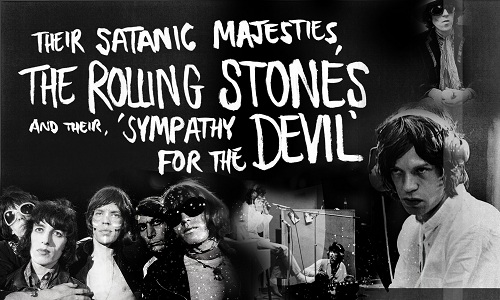
The Rolling Stones and their Sympathy for the Devil 3

After each verse he proclaims, “Pleased to meet you, hope you guessed my name, but what’s puzzling you is the nature of my game.”

The story behind the Sympathy for the Devil

The song is the lead track from the 1968 album Beggars Banquet, released by the infamous Rolling Stones, tyrants of the sixties pop chart.

The Rolling Stones need no introduction, and by this time they had become household names, with the classic line up of Mick Jagger, Keith Richards, Brian Jones, Bill Wyman and Charlie Watts.

They had become familiar faces both in the musical press and on television sets.

The national press, however, had labelled them evil, suggesting that you should lock up your daughters to prevent those princes of darkness inducting them into a debauched lifestyle of sex, drugs and rock and roll.
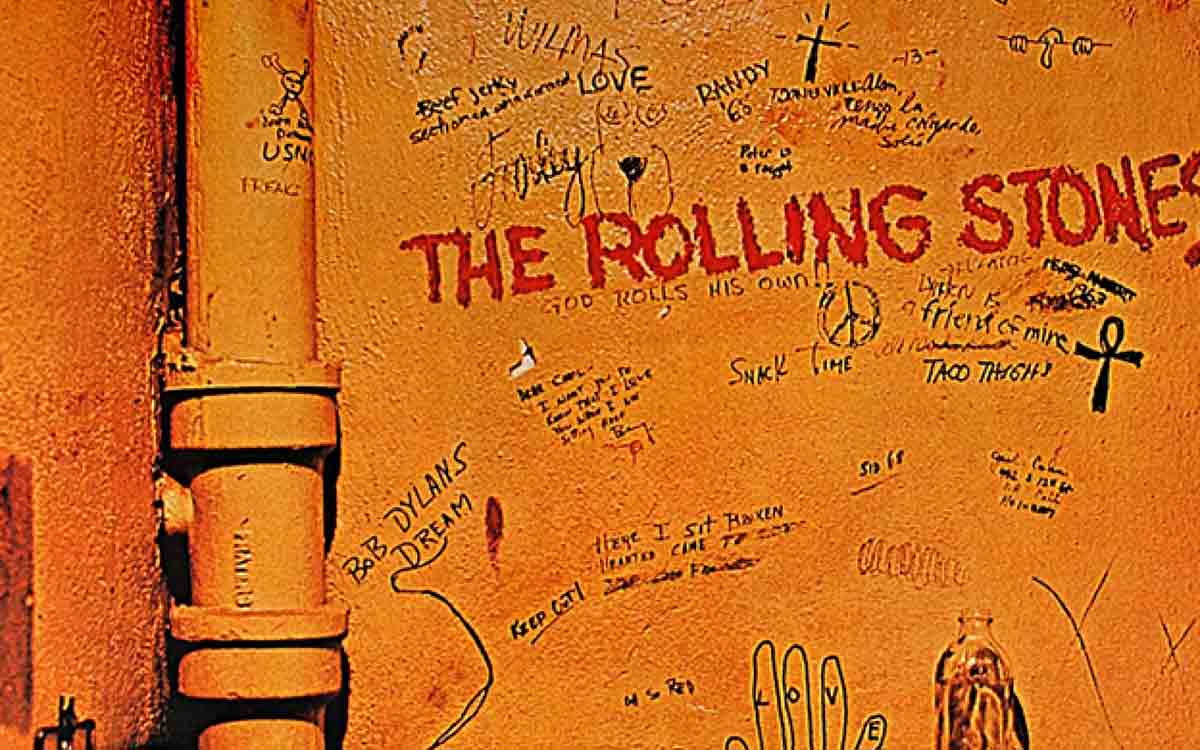
Sympathy for the Devil is the lead track from Beggars Banquet

Their previous album in 1967 was called Their Satanic Majesties Request but its cover portrayed a different story to its title.

The band resemble fancy dress goers instead of satanic followers. Attired as medieval jesters and circus hands, Jagger looks like Mickey Mouse in Fantasia rather than a practicing magician.

They may have been seduced by occult themes and imagery, but I doubt they ever dabbled into its applied side.

Their dark side was a romantic notion fuelled by their manager Andrew Loog Oldham, the constant press frenzy and a handful of songs (tunes that are cousins of their initial love, the blues, dubbed the devil’s music).

A run of bad luck and coincidence plagued them throughout their career, perpetuating the idea they were in league with the devil.

Almost a year after the albums release, guitarist Brian Jones was found dead in his swimming pool in mysterious circumstances.

The band would go on to perform a tribute concert in Hyde Park, releasing half dead butterflies (not on purpose, they had died of the heat exhaustion in their box, and the dead ones were thrown out by the bands Hells Angels helpers) into the air during a recital of a Shelley poem.
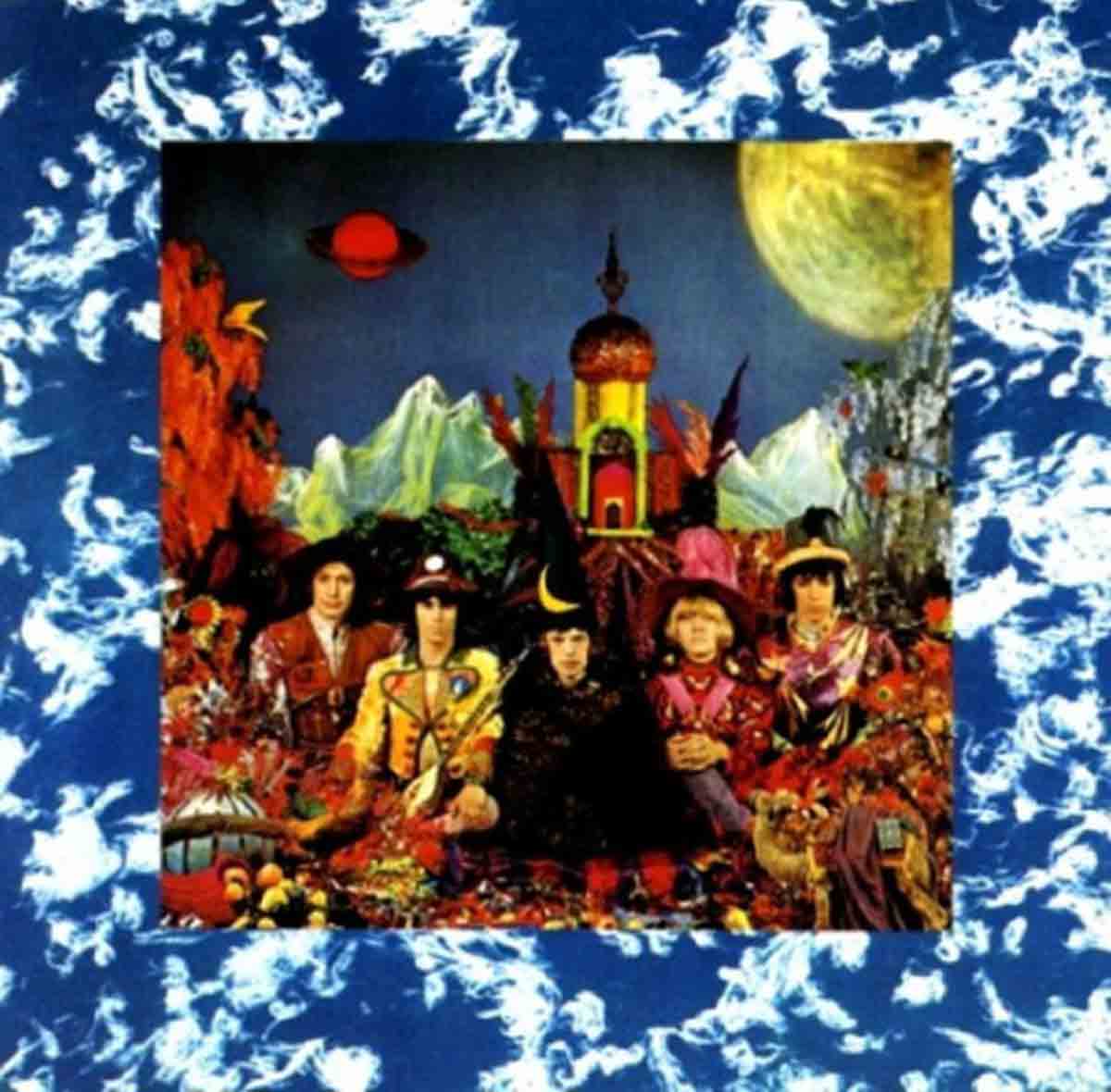
Their Satanic Majesties Request Cover

The same year as Beggars Banquet, Jagger acted in Donald Cammel’s film Performance, co-directed with Nicholas Roeg.

He stars as alter-ego singer Turner, who shelters a gangster in hiding named Chas.

The film plays with notions of identity, influenced by Borges and Artaud’s rumination on madness and performance.

Eventually the two men become one, Turner and Chas in dual possession, like a swinging sixties meets Freud version of H.P. Lovecrafts The Thing On The Doorstep.

Author Alan Moore recently played with The Rolling Stones reputation by basing a band on them in his graphic novel, ‘The League of Extraordinary Gentlemen, Century: 1969‘.

In the story he has the Brian Jones character called Basil killed in his pool by robed occultists.

Before the owner of a magic shop visits the lead singer Terner and they hatch a plan to birth a moonchild at a tribute concert to the dead guitarist.

This is the Stones as myth as fiction.

The image of the band on Beggars Banquet is closer to the truth, here they are depicted as medieval lords, masters of their own kingdom no less.

Cavorting at a feast, post fight, pre-wenching and mid roast pig.

I’m guessing that Jagger and co had grown tired of the evil tag, Which is probably fair enough when they were surrounded by the world’s daily media.

Television and press showing the horror of war and other atrocities on the hour every hour.

What was a little dope compared to the slaughter of millions you can hear them say.

I believe the singer used the song to point out that fact – many a thing had been done now and in the past that was far worse than what they got up to between shows.

Jagger wrote most of the song himself, directing the others and accepting musical help from Richards, who as usual controlled silently.

This can be seen clearly in the ’68 film ‘One Plus One’ directed by auteur Jean-Luc Godard.

A great snapshot of them working, it reveals the band play through the song in the spacious Olympic studios.

As is Godards way, footage of The Stones is interspersed with political scenes, voice overs and tracking shots.

In the film we get to see the band morph the track from a blues ballad into the funky samba it became. Jagger said he got the idea for the song from one of his French books, possibly the poet Baudelaire, but any attempts to find the reference again had failed.

I think that’s because he misremembered.

Strikingly many people, including me, have noticed the similarity with Mikhail Bulgakov’s ’67 novel The Master and Margarita.

In the novel, the devil appears in Moscow as a suave learned gentleman with a great knowledge of history and a wicked streak.

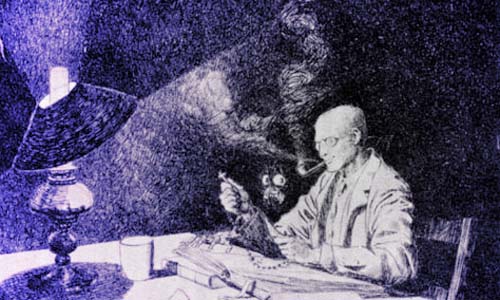
Accompanying him are a retinue of companions, including an overweight, man-sized, cigar smoking, black cat called Behemoth.

Near the beginning of the tale the devil has a conversation about Jesus and Pilate, just as the song mentions.

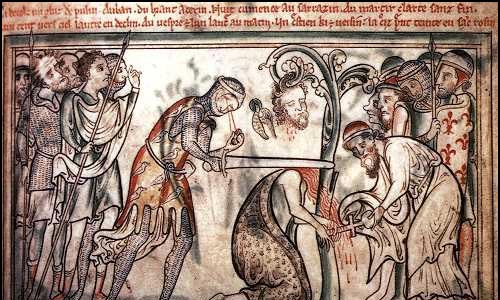
The devil then proceeds to play havoc with the populace by pretending to be a stage magician, beheading a couple of people and enticing the lady Margarita.

Translated into French at the time, I guess Jagger mixed up Baudelaire with The Master and Margarita.

The song continues, telling of World War II’s ‘blitzkrieg’ and the assassination of the Kennedy’s (sadly amended to plural when Bobby’s death was announced during recording of the song).

This trail of anarchy is backed by catchy woo-woo backing vocals and a driving beat.

By now we’ve realised the singer is the devil, delighting at having a hand in these world changing events, revelling in his destruction with wit and charm.

Could these events be the true face of Satan?

Whether it was his intention or not, the song made Jagger into the protagonist.

People took the theatre of ‘Sympathy for the Devil’ for the singers own beliefs and the whole satanist tag perpetuated.

I think if Jagger had made a pact with the devil and was really studying the occult he would have locked himself away and spent all his energy searching for a youth elixir.

The truth is that the rumour and myth makes the band cool, and we like to believe in it, I for one applaud that notion.

The band didn’t manage to birth a moonchild or cause the apocalypse, instead they’ve kept on rocking into their 50th year.

Conclusion

For me if the devil owned a music, one you could groove to, then ‘Sympathy for the Devil’ wouldn’t be a bad choice, I suspect though his music is an unlistenable torment.

Back in in my youth I regularly attended a local indie disco.

The first strains of the song would signal the end, and after the needle had stopped my friends and I would stumble out into the night with the refrain of the devil whirling round in our heads.

DOM COOPER is a graphic designer, illustrator and writer. He co-runs Rif Mountain Records and plays in The Straw Bear Band. Previously he played in The Owl Service, The Fiends and Wolfgang & The Wolf Gang. Dom is obsessed with music, and is interested in British folklore, history and culture. Follow him at @domcooperdesign | Find him at www.domcooper.com
Listen to Sympathy for the Devil


Austin Osman Spare Paints Nightmares

Austin Osman Spare Paints Nightmares 7

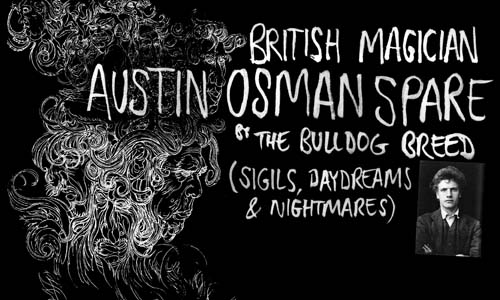
DOM COOPER looks at the history behind the track “Austin Osman Spare”, a song about the British artist and occultist by The Bulldog Breed

Austin Osman Spare

Opening with a chiming guitar backed by a bubbling bass, a phased voice sings: “Austin Osman Spare painted daydreams … Austin Osman Spare painted nightmares …”

Beatlesque voices join in as ghostly echoes in the background. The lyric continues to speak of Spare lighting black candles, being ahead of his time and living on with us – because through his drawings we can worship his ideas.

Who was Austin Osman Spare?

Austin Osman Spare was a British artist and occultist, born in 1886 in Snow Hill near Smithfield in London.

At the age of seven his family moved to Kennington and enrolled him in a Christian school.

Later of this time he told a tale of how he met an elderly lady descended from the Salem witches called “Witch Patterson” who seduced him and taught him magic.

At the age of 12, his interest in art flourished.

He later went on to attend the Royal College of Arts where he was proclaimed as a prodigious talent. Upon leaving, his career took off as he became an illustrator and bookplate designer.

The songs chorus ends on the line: “Is he in heaven or come back from hell?”
After we hear it for the second time a small drum kit rolls in to play with compressed hi-hats, and a breathy flute flutters above them.

The Bulldog Breed

The Bulldog Breed were a short lived incarnation made up of members from earlier underground acts, such as The Flies, Please and The Gun.

They produced one album of mod-tinged pop-psych with heavy parts and some supernatural inspired lyrics.

Prior to that the band released a single on Deram in 1969 entitled Portcullis Gate backed by Halo In My Hair.

Their album appeared soon afterwards on Nova, it was called Made In England.

In 1907, Austin Osman Spare had his first exhibition in the West End, showing black and white drawings.

In attendance was Aleister Crowley, the infamous occultist and former member of The Golden Dawn.

He asked Spare to illustrate for him, offering in payment an induction into his newly formed Argenteum Astrum, an order of magical Thelemites.

Austin Osman Spare
Austin Osman Spare.

Austin became the seventh member, completing the order.

The two later fell out, as Spare didn’t agree with Crowley’s methods of ceremonial magic.

Austin Osman Spare went on to create his own magic through the form of sigils and automatic drawing, but his increasing interest and lack of a social manner meant that his artwork was relegated to esoteric circles and he ended up exhibiting in pubs.

Guitarist Rod Harrison came to write the song because his grandmother had been an acquaintance of Spare, she often took Rod to exhibitions held in local pubs and it was there that they saw Spare’s work.

Harrison inherited some of the prints and sketches, but through subsequent moves he lost them.

A chance conversation with his band members brought up the subject and they decided to base a song on Spare, recording it as the final track for ‘Made in England’. Rod went on to play in the proggier band Asgard who also recorded the song.

Although the track doesn’t reflect Austin Osman Spare’s work (that would take much research), it does offer up an insight into the man.

A psych gem, the track ends in a fog of whips, screams and reversed sounds.

Discover how magick has been portrayed in cinema, with our article: Bell, Book and Camera: A Guide to the Occult on Film


Suicide and Ghosts: Throbbing Gristle’s Beachy Head

Suicide and Ghosts: Throbbing Gristle's Beachy Head 8

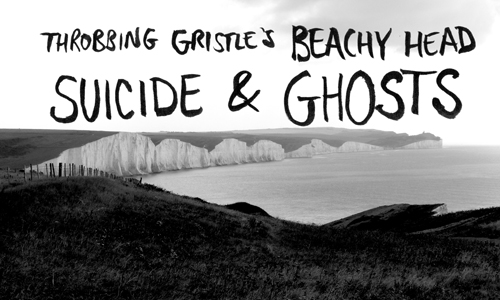
Throbbing Gristle’s Beachy Head is about the notorious East Sussex suicide spot. DOM COOPER looks at the disturbing background to the song…

Throbbing Gristle's Beachy Head

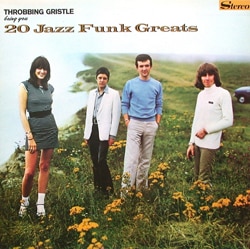
The album is called 20 Jazz Funk Greats and its cover is adorned with a kitsch photo of the group Throbbing Gristle standing at the edge of a cliff.

Against a lush green grass that is punctuated by bright yellow flowers, the band looks very 1970s in its summer pastels.

But the tame scene holds a much darker resonance (shades of suburban England, a touch of behind closed doors and a hint of best not talked about) because the cliff behind the band is Beachy Head.

Where is Beachy Head?

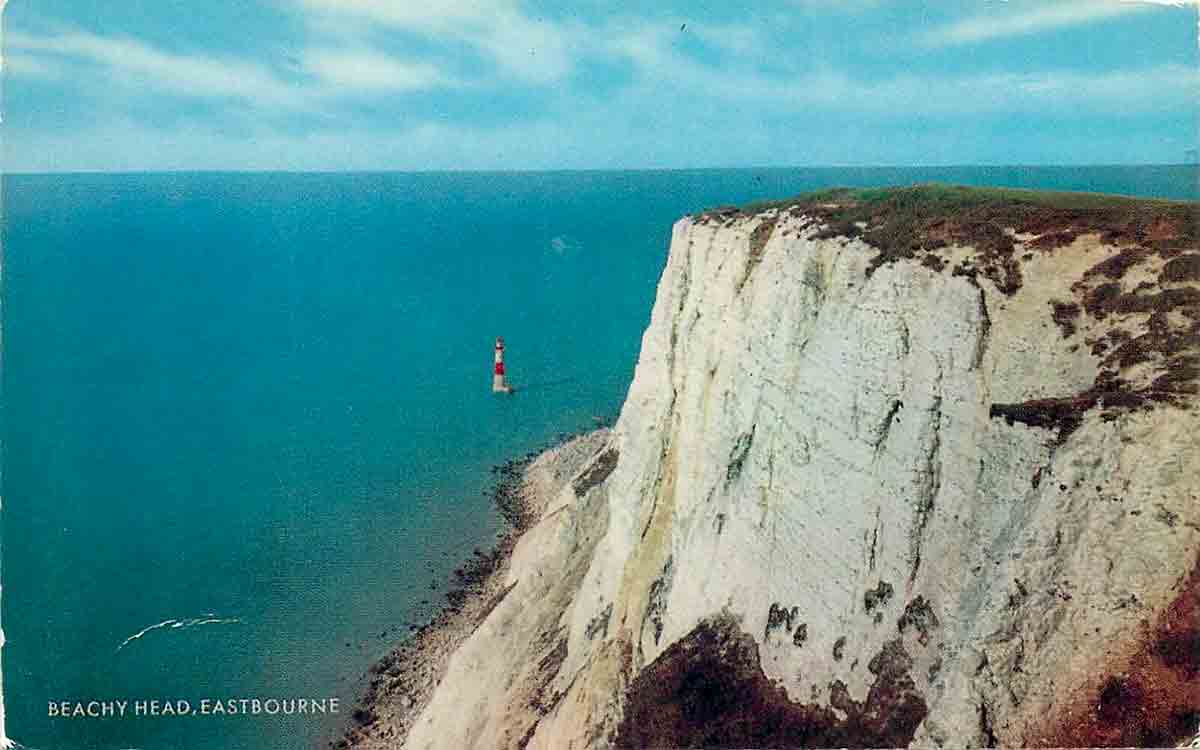
England’s most infamous suicide spot, Beachy Head is the highest cliff on the East Sussex coast and the southernmost point of the Downs.

For many years, its strange pull has lured people to its edge to fling themselves to their doom.

A local police sergeant commented: “There is something really weird on the cliff top. It seems to make the most intrepid person liable to become dizzy or frightened.”

An estimated 20 deaths a year are attributed to the site, which is regularly patrolled by Samaritans and a Chaplaincy team.

Who were Throbbing Gristle?

Perfect subject matter for Throbbing Gristle, who were an industrial noise band with links to the visual arts and performance art.

Consisting of Genesis P-Orridge (born Neil Megson – bass guitar, violin, vocals, vibraphone), Cossi Fan Tutti (guitars, cornet, vocals), Peter ‘Sleazy’ Christopherson (tapes, found sounds, horns, piano, vibraphone, synthesizer), and Chris Carter (synthesizers, tapes, electronics), the band built a reputation as provocateurs by using disturbing imagery of Nazis, concentration camps and pornography in their live performances.

Musically they used samples and sound effects, spoken-word and distortion to carry their brand of anarchic punk on to the public.

Initially they split in 1981 after releasing only three albums, but later reformed, carrying on until Christopherson died in his sleep at the age of 55 in 2010.

On 20 Jazz Funk Greats, the track Beachy Head is simple but eerily effective. A deep foghorn-like synth is built upon by another synth that sounds half way between the stirring wind atop the cliff and a motorway. The darkness is made all the more sinister by the sound of seagulls.

Throbbing Gristle's 20 Jazz Funk Greats

A pleasant seaside noise that helps the overall track become creepier.

Many a ghost has been seen upon Beachy Head.

Most notoriously the Black Monk, who stands at the cliff’s foot beckoning those at the top to join him at the bottom – calling on them to jump.

“Most notoriously the Black Monk, who stands at the cliff’s foot beckoning those at the top to join him at the bottom – calling on them to jump.”

There have also been sightings of a young woman in an old fashioned grey dress known as the Grey Lady, who has been said to walk near the cliff edge before throwing herself off.

A similar ghost is a woman who clutches a baby. She too walks close to the edge before falling to her doom. She is said to be the Victorian ghost of a farmers wife whose husband was brutally murdered.

On the Throbbing Gristle track, the wind sounds become woozy. A high pitch scrape of a synth joins in, edging ever closer to the cliff edge.

The foghorn sound shifts, as if it’s getting dizzy, darker stabs of sound merge in. Finally one large foghorn gives way to the seagulls circling.

In 1952, a mass exorcism was performed, attended by over one hundred people who gathered around large wooden crosses that were erected for the event.

But even that hasn’t stopped the lure of Beachy Head.

What do you think of Throbbing Gristle’s Beachy Head? Tell us in the comments section below!

Listen to Beachy Head by Throbbing Gristle